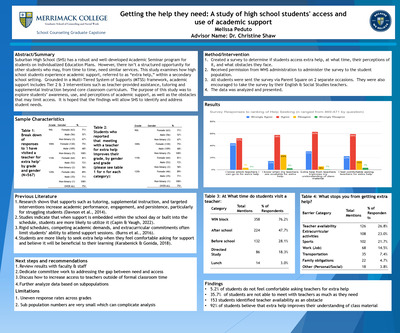

-
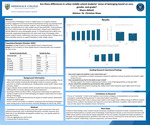
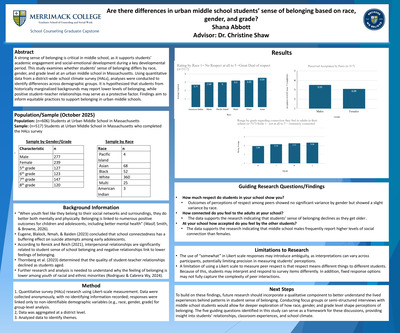
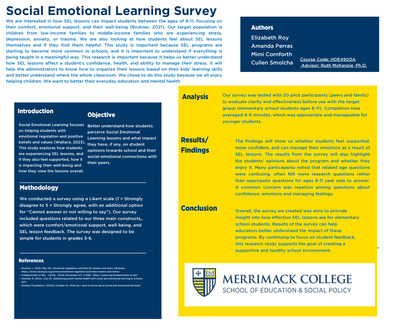
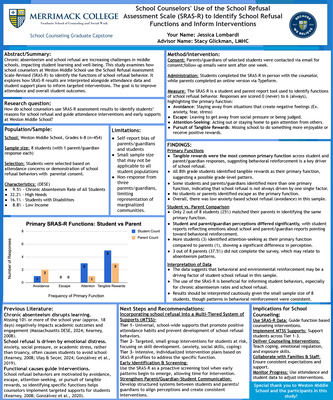
Are there differences in urban middle school students’ sense of belonging based on race, gender, and grade?
Shana Abbott
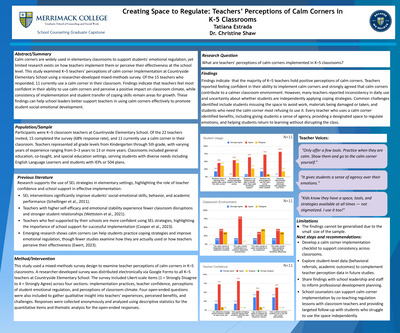
This study examines student sense of belonging and student/teacher relationships in an urban middle school, with a focus on differences across race, gender, and grade level. Research suggests that a strong sense of belonging is linked to improved academic outcomes, consistent attendance, and social-emotional well-being, yet disparities in belonging and student/teacher relationships persist among diverse student populations. Using a quantitative design, data will be collected through a validated student survey measuring perceived belonging, and student/teacher relationships. The sample will include students in grades 5 through 8, representing a range of racial and gender identities.
-
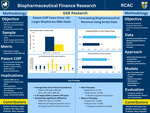
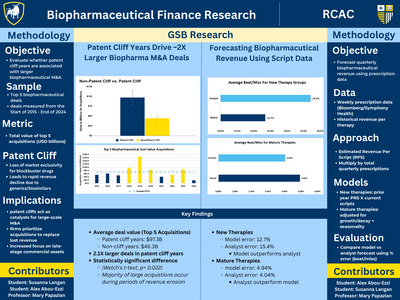
“Patent Cliffs as Catalysts for Biopharma M&A” and “Forecasting Biopharma Revenues Using Prescription Data.”
Alex Abou-Ezzi
Patent cliff years—periods when blockbuster and mega-blockbuster therapies lose market exclusivity—trigger rapid revenue erosion for affected biopharmaceutical companies. This paper examines whether these revenue shocks systematically influence acquisition behavior. Using data from 2015–2024, we look at patent cliff years and compare M&A activity across cliff and non-cliff periods. The five largest acquisitions in patent cliff years averaged $97.3 billion, more than double the $46.3 billion in non-cliff years, a statistically significant difference (t-test, p = .022). Analysis of Humira, Revlimid, Lyrica, and other blockbuster therapies demonstrates how exclusivity loss influences dealmaking, particularly amongst firms most affected by generic and biosimilar entry. Using relationships between revenue erosion and acquisition spending, we forecast approximately $39 billion in acquisitions by Bristol Myers Squibb and Merck as they navigate losses of their respective top therapies during the 2028 patent cliff. The evidence indicates that patent cliffs are catalysts for significant biopharmaceutical M&A.
-
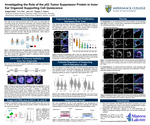
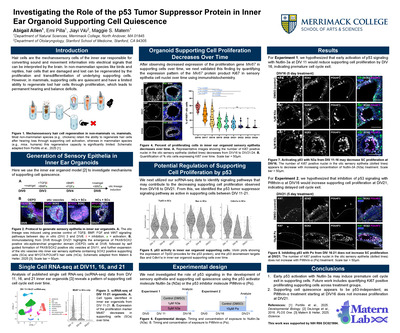
Investigating the Role of the p53 Tumor Suppressor Protein in Inner Ear Organoid Supporting Cell Quiescence
Abigail Allen
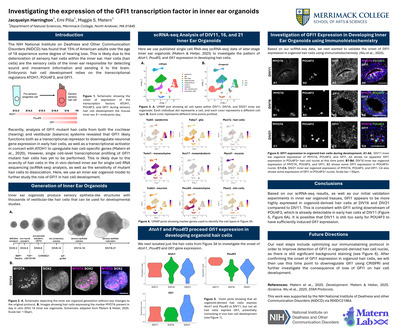
Hair cells are the mechanosensory cells of the inner ear responsible for converting sound and movement information into electrical signals that can be interpreted by the brain. In non-mammalian species like birds and reptiles, hair cells that are damaged and lost can be regenerated by the proliferation and transdifferentiation of underlying supporting cells. However, in mammals, supporting cells are quiescent and have a limited ability to regenerate lost hair cells through proliferation, which leads to permanent hearing and balance deficits. Our lab has shown that supporting cells in stem cell-derived inner ear organoids also enter quiescence after hair cell generation, mimicking the in vivo inner ear. Using single-cell RNA sequencing of inner ear organoids at multiple developmental stages, we further found that p53 signaling is active in supporting cells during this time. The p53 protein is a tumor suppressor capable of regulating cell proliferation and inducing apoptosis. During inner ear development, precise p53 activity has been shown to help control cell proliferation and maintain the formation of proper tissue morphology. We therefore hypothesize that p53 may play a role in inducing supporting cell quiescence. To further investigate this, we manipulate p53 activity in inner ear organoids using pharmacologic activators and inhibitors at different developmental stages in culture. We then assess the impact of p53 modulation on supporting cell proliferation using the marker Ki67. Understanding how p53 contributes to supporting cell quiescence may reveal strategies to stimulate hair cell regeneration in the mammalian inner ear.
-

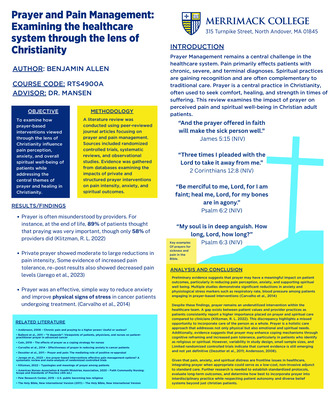
Prayer and Pain Management: Examining the Healthcare System through the Lens of Christianity
Benjamin Allen
This project examines the role of prayer in pain management through the lens of Christianity within the United States healthcare system.
I explored how structured prayer interventions in the clinical setting impact both the clinical team and patients. While modern healthcare emphasizes pharmacological and evidence-based practices, spiritual and prayer-based interventions remain an underutilized and often forgotten form of coping and pain management, whether that be physical or emotional pain.
A recent review of the literature reveals that prayer can have measurable physiological and psychological benefits. Studies indicate prayer-based interventions might reduce pain intensity, pain tolerance, and decrease anxiety and blood pressure especially patients with chronic illnesses or patients going through things like chemotherapy. Additionally, research highlights the disconnect between patients and providers: While the majority of patients find prayer and spiritual practices important at end of life, fewer providers recognize incorporating them into care.
From a Christian, prayer is a model of compassion for self. Prayer is a form of holistic care that attends to both the physical and the spiritual suffering of patients. Nursing organizations such as the ANA affirm the importance of spiritual interventions and care of the whole person's mind and body.
Ultimately, I urge healthcare professionals to acknowledge and integrate prayer into their clinical settings. By actively supporting and implementing prayer interventions, we can better address the spiritual and emotional needs of patients experiencing pain. I am committed to collaborating with colleagues to develop practical strategies that make prayer a recognized component of holistic care.
-
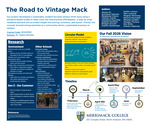
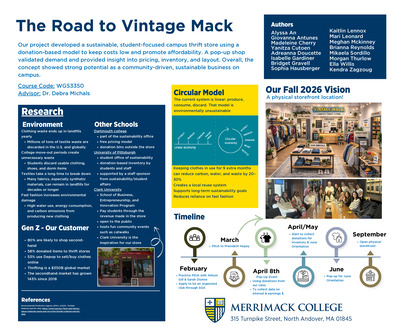
Vintage Mack - Creating a Campus Thrift Store
Alyssa An, Giovanna Antunes, Madeleine Cherry, Yanitza Cutoen, Adreanna Doucette, Isabelle Poppy Gardiner, Bridget Gravell, Sophia Hausberger, Kaitlin Lennox, Mari Leonard, Meghan Mckinney, Brianna Reynolds, Mikaela Sordillo, Morgan Thurlow, Ella Willis, Kendra Lynne, and Kendra Zagzoug
Our class project focused on developing a campus thrift store designed specifically for college students. The goal was to create a simple, low-cost, and sustainable business model that aligns with Gen Z shopping behaviors and values. Through research, we found that students are increasingly drawn to secondhand shopping because it is affordable, environmentally friendly, and allows for unique self-expression. These trends validated the demand for a thrift store tailored to a college environment.
Our business model centers on a donation-based inventory system, where students, faculty, and community members contribute gently used clothing, jewelry, and accessories. This approach keeps startup costs low while supporting sustainability. The store would operate as a moderate-sized, student-run retail space on campus, with clearly labeled sections, a changing area, and space for storage and donations. We also incorporated an online component through Depop to expand reach and meet students where they already shop.
To test our concept, we conducted a successful trial run pop-up shop on campus. The event generated strong student interest, validated demand, and provided valuable insight into pricing, inventory preferences, and store layout.
We analyzed key competitors, including fast fashion brands like Shein, convenient retailers like Amazon, and resale platforms such as Depop and Poshmark. Our competitive advantage lies in being a hyper-local, community-driven, and student-focused experience. We also developed a SWOT analysis and proposed survey questions to better understand student preferences, pricing expectations, and demand.
Overall, this project highlights the strong potential for a campus thrift store to succeed as both a business and a campus initiative, combining sustainability, affordability, and student engagement.
-
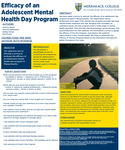
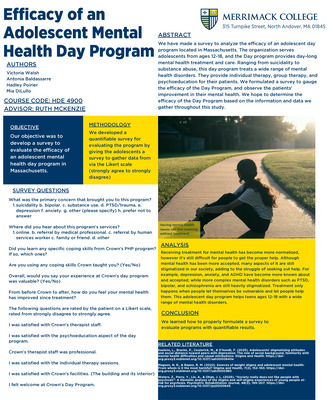
Efficacy of an Adolescent Mental Health's Day Program
Antonia Baldassare, Mia DiLullo, Hadley Poirier, and Tori Walsh
We have endeavored to analyze the efficacy of an adolescent day program located in Massachusetts. The organization serves adolescents from ages 12-18, and the Day program provides day-long mental health treatment and care. Ranging from suicidality to substance abuse, this day program treats a wide range of mental health disorders. They provide individual therapy, group therapy, and psychoeducation for their patients. We will distribute a survey gauging the efficacy of the Day Program to former and current patients, collect data, and observe the patients' improvement in their mental health. We hope to determine the efficacy of the Day Program based on the information and data we gather throughout this study.
-
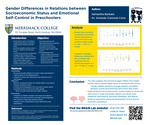
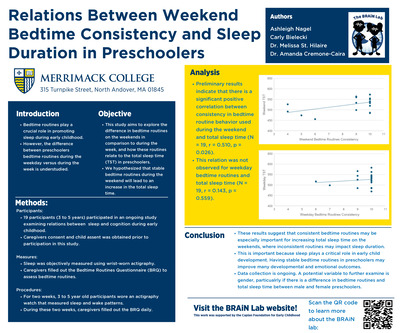
Gender Differences in Relations between Socioeconomic Status and Emotional Self-Control in Preschoolers
Samantha Barbato
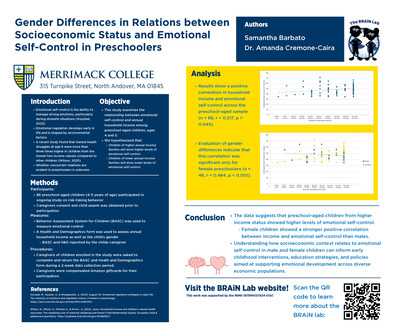
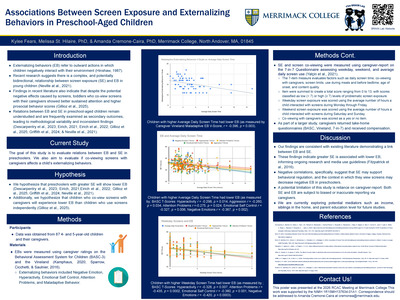
Socioeconomic status is associated with childhood development, most notably emotional regulation and behavioral outcomes. This study examines the relationship between annual household income and emotional self-control among preschool-aged children between ages 4 and 5. Emotional self-control refers to one's ability to regulate emotional responses, manage frustration, and respond to challenging situations in socially appropriate ways. In our study, caregiver-report on the Behavior Assessment System for Children (BASC) was used to measure emotional control. Caregiver-report on a Health and Demographics form was used to assess annual household income as well as the child's gender. We hypothesized that preschool-aged children from higher-income households would display stronger emotional self-control (Wilson, 2025). On the contrary, children from lower income households may experience environmental stressors that influence emotional regulation, such as food insecurity or unstable housing. Furthermore, it was hypothesized the correlation between annual household income and emotional self-control would be stronger in females compared to males in our sample. To date, our preliminary results show a positive correlation in household income and emotional self-control across our preschool-aged sample (n = 86, r = 0.217, p = 0.045). Evaluation of gender differences indicate that this correlation was significant only for female preschoolers (n = 46, r = 0.484, p < 0.001). Understanding how socioeconomic context relates to emotional self-control in male and female children can inform early childhood interventions, education strategies, and policies aimed at supporting emotional development across diverse economic populations.
-
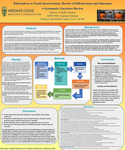
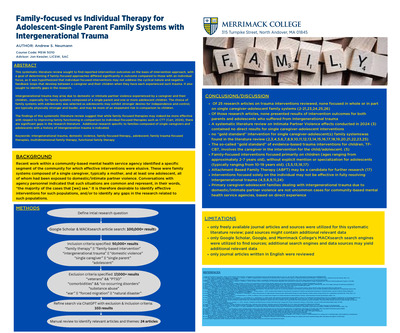
Alternatives to Youth Incarceration: Review of Effectiveness and Outcomes
Zuneivy Alexandra Bello
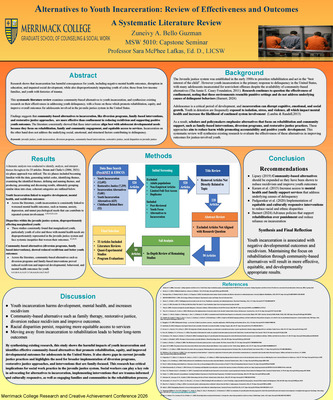
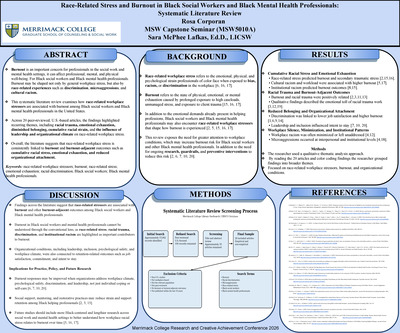
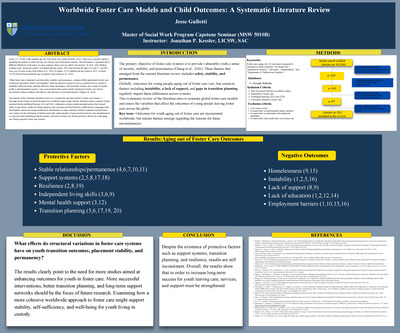
Research consistently demonstrates that incarceration has harmful consequences for youth, including negative mental health outcomes, disruption in education, and impaired social development, while also disproportionately impacting youth of color, those from low-income families, and youth with histories of trauma. Despite the substantial existing evidence on the harmful impacts of youth confinement, incarceration continues to be the primary response to youth delinquency in the United States. This systematic literature review examines community-based alternatives to youth incarceration, and synthesizes existing research on their effectiveness in addressing youth delinquency, with a focus on those which promote rehabilitation, equity, and improve overall outcomes for adolescents involved in the juvenile justice system in the United States. Drawing on research on multisystemic and family-focused therapies, restorative justice programs, and diversion initiatives, this review will examine how these interventions balance accountability with support for the youth, their families, and their communities. Lastly, it will also examine the different models of alternative interventions that are being implemented, and identify factors that can influence the successful implementation of alternative programs across diverse communities. The findings of this literature review have the potential to inform social work practice, policy, and future research in a way that prioritizes equitable and developmentally appropriate responses to youth delinquency.
-
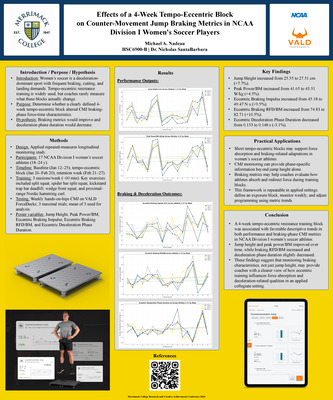
Identifying Jump Performance Deficiencies in Division I Basketball Players with Markerless Motion Capture
Joseph Berry
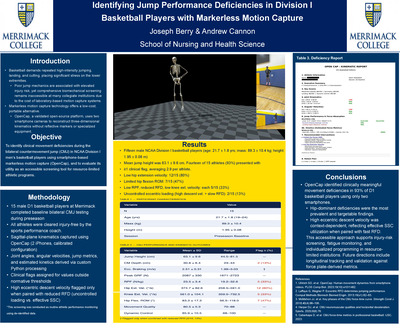
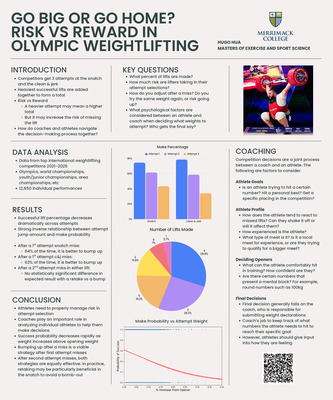
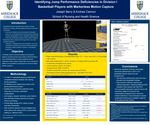
This screening used OpenCap, a smartphone-based markerless motion capture system, to screen bilateral countermovement jump (CMJ) performance in 15 NCAA Division I men's basketball players during preseason baseline testing. Joint kinematics, angular velocities, jump performance metrics, and estimated force metrics were derived from OpenCap pose estimation data using custom Python processing. Clinical flags were assigned when values fell outside normative thresholds.
Results revealed that 93% of athletes (14/15) presented with at least one clinical deficiency, averaging 2.9 flags per athlete. Low hip extension velocity was the most prevalent finding at 80%, followed by limited hip flexion range of motion (47%). Low relative propulsive force, reduced rate of force development, and low knee extension velocity were each present in 33% of athletes. Notably, high eccentric descent velocity was only flagged as a deficiency when paired with reduced rate of force development (13%), distinguishing uncontrolled eccentric loading from effective stretch-shortening cycle utilization. Mean jump height was 63.1 ± 9.6 cm across the cohort.
The high prevalence of hip-dominant deficiencies across the roster highlights the importance of targeted interventions for hip mobility and extensor power development in basketball populations. These findings demonstrate that clinically meaningful movement screening can be conducted using accessible, low-cost markerless technology, offering a practical alternative for institutions that lack the resources for laboratory-based motion capture systems. This approach supports proactive injury risk identification, fatigue monitoring, and individualized training program design in collegiate athletics.
-

Evaluating the Impact of Coping Skills and Riverside Community Care Programs for Teen Mental Health
Olivia Bessette, Melissa Keeley, Emily LoVuolo, and Ashlee Purcell
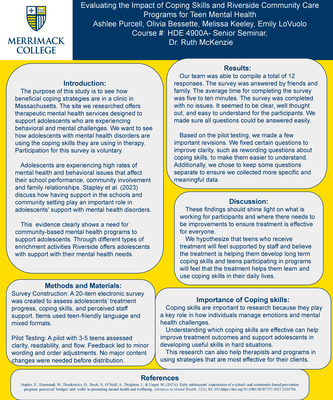
The purpose of this project is to see how beneficial coping strategies are at RCC(Riverside Community Care). The participants will be adolescents and asked to complete a short survey that will only take five to ten minutes of their time. The survey that they complete will be great input for data that will be shown in our findings.
-
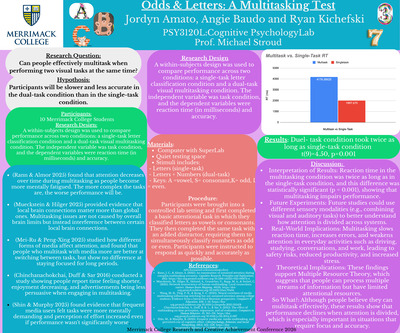
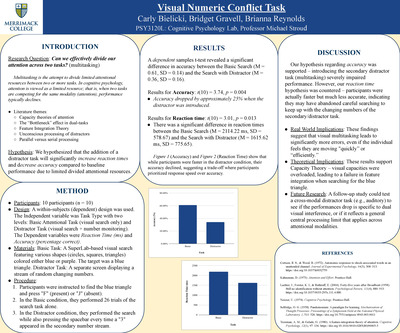
Visual Numeric Conflict Task
Carly Bielicki, Bridget Gravell, and Brianna Reynolds
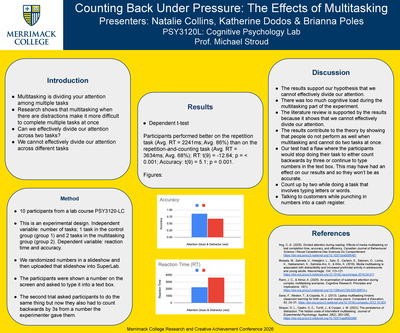
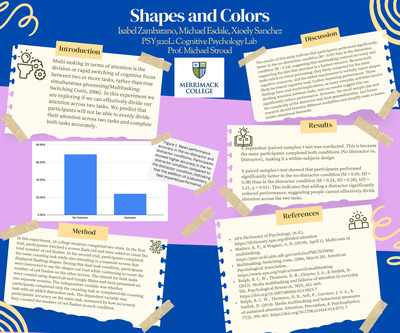
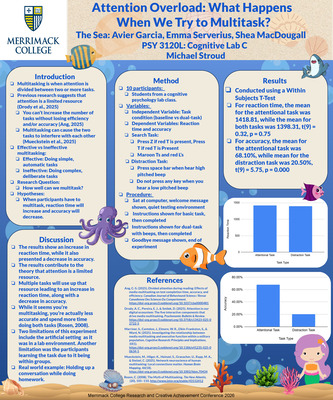
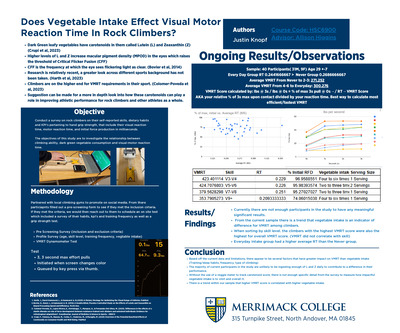
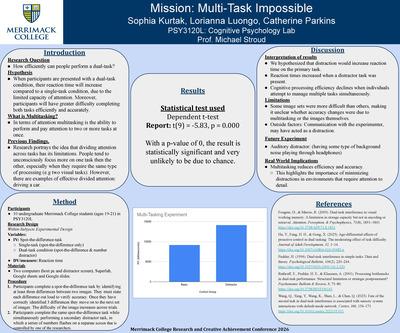
This study investigates whether individuals can effectively divide their attention across two tasks, given that attention is a limited cognitive resource. Participants completed a basic visual search task in which they identified the presence or absence of a target stimulus (a blue triangle) among distractors. Performance was measured using reaction time and accuracy. In the experimental condition, participants completed the same visual search task while simultaneously performing a distractor task within the same visual modality. The distractor task required participants to monitor a continuous stream of numbers and press the spacebar whenever the number 3 appeared. By comparing performance between the single-task (baseline) condition and the dual-task (visual search + distractor) condition, this study aims to determine how dividing attention affects cognitive performance. It is predicted that participants will show slower reaction times and reduced accuracy in the dual-task condition due to competition for limited attentional resources. This design allows for a controlled examination of multitasking and the extent to which attention can be shared between tasks that rely on the same sensory modality. The findings will contribute to a better understanding of the limits of attention and the cognitive costs associated with multitasking in everyday situations.
-

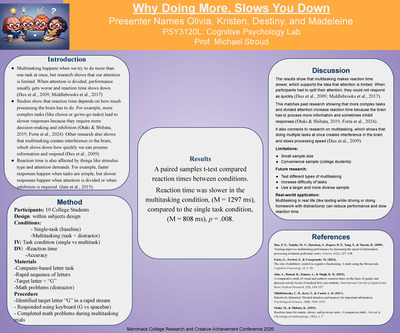
Why Doing More Slows You Down
Madeleine Blenkush, Olivia Luchini, Kristen Kelley, and Destiny Spanos
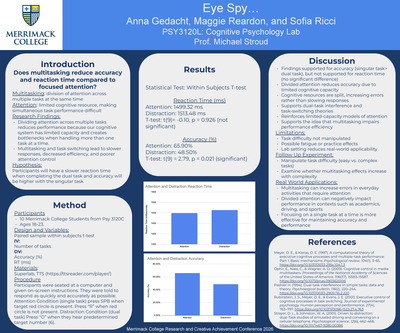
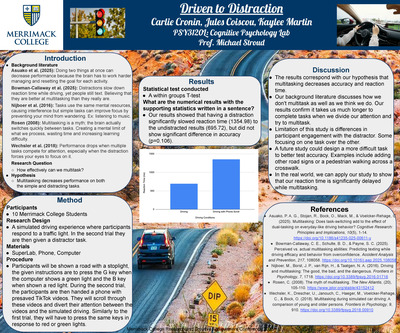
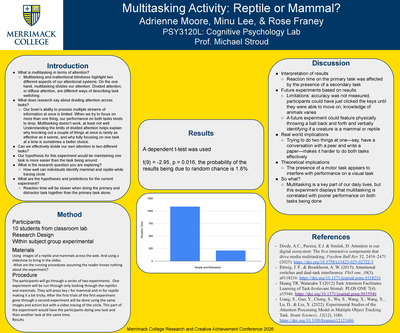
Our experiments aims to measure multitasking ability and the amount of distraction caused by a secondary mental task. Participants are asked to identify the letter "G" in a series of letters in one trial block, and in the next are asked to do the same while also answering mah questions provided by the researcher.
-

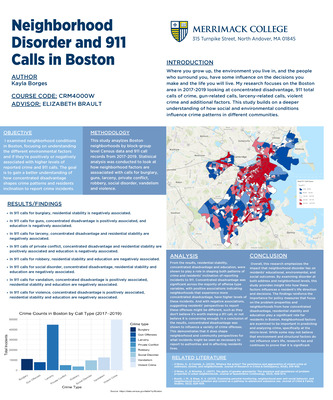
Neighborhood Disorder and 911 Calls in Boston
Kayla Borges
My project looks at the question: How can concentrated disadvantage be associated with the frequency of 911 calls for crime, guns, and related incidents across a variety of Boston neighborhoods between 2017 and 2019? There's a history of research, many of which include the broken windows theory, suggesting there is association with disorder and perception of crime, influencing an increase in such disorder and crime. Disordered living conditions have always been present in any city or well populated area, but does living in these areas impact a residents future. My focus in this study provides a similar, but diving a little deeper into how those disorders and areas involving crime can have a connection to the residents living in and around those areas, specifically in the city of Boston and using data from the 911 calls in Boston.
-

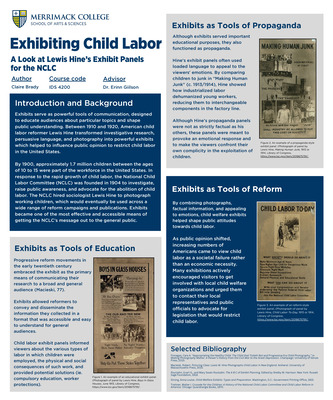
Exhibiting Child Labor: A Look at Lewis Hine's Exhibit Panels for the NCLC
Claire Brady
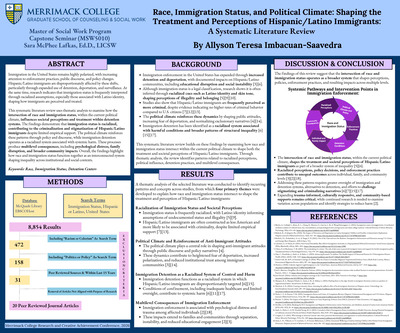
Exhibiting Child Labor: A Look at Lewis Hine’s Exhibit Panels for the NCLC is a poster based upon my capstone research project of the same name. It examines how child welfare exhibitions during the 1910s functioned as powerful tools of education, propaganda, and social reform, with a particular focus on exhibit panels designed by social photographer Lewis Hine for the National Child Labor Committee (NCLC). Progressive reformers transformed empirical research on the harms of child labor into visually compelling narratives that helped to reshape public understanding of the issue in the United States.
As industrialization expanded at the turn of the twentieth century, so did the exploitation of children in the labor force. In response, the NCLC turned to exhibitions by using a multimodal approach where they combined photographs, charts, and text to create emotionally engaging displays that communicated their message of reform to a broad audience in cities across the country. Central to this campaign were Hine’s photographs and exhibit panels, produced between 1908 and 1918. This project analyzes panels such as Boys in Glass Houses (1913) and Making Human Junk (c. 1914) to demonstrate how Hine integrated visual evidence with carefully crafted language to create eye-catching exhibits with messages meant to educate, appeal directly to viewers' emotions, as well as encouraging them to take action against child labor. His work balanced claims of objectivity with emotional appeal, guiding viewers toward specific interpretations of child labor as being physically, emotionally, and morally harmful to child workers.
-
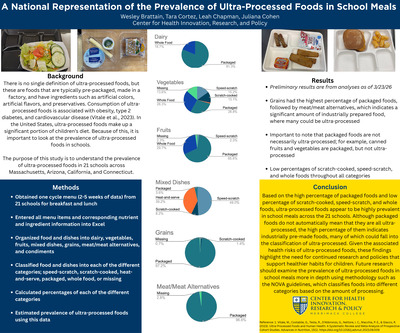
A National Representation of the Prevalence of Ultra-Processed Foods in School Meals
Wesley Brattain
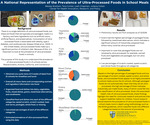
Consumption of ultra-processed foods is associated with obesity, type 2 diabetes, and cardiovascular disease. In the United States, ultra-processed foods make up a significant portion of children’s diet. A significant amount of children eat school meals, so it is important to look at the prevalence of ultra-processed foods in schools. The purpose of this study is to understand the prevalence of ultra-processed foods in 21 schools across Massachusetts, Arizona, California, and Connecticut.
-
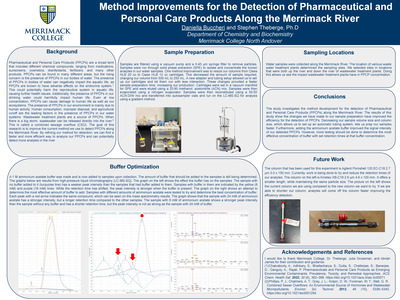
Method Improvements for the Detection of Pharmaceutical and Personal Care Products Along the Merrimack River
Daniella Buccheri
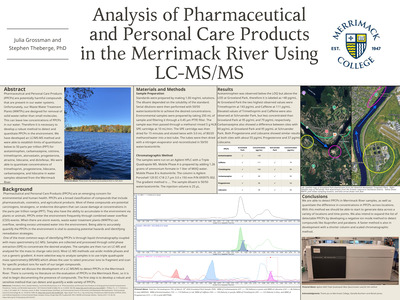
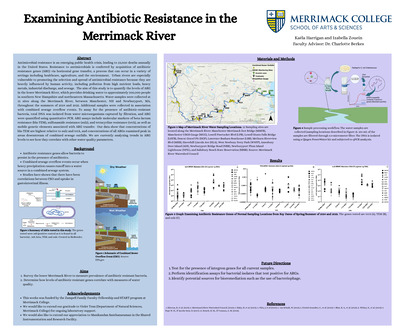
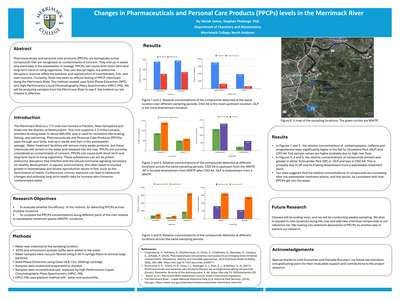
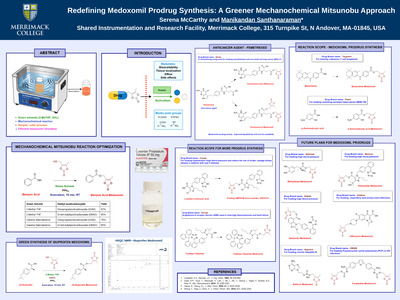
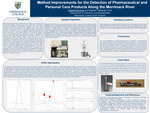
The detection of contaminants in our water systems is important for environmental monitoring and source identification. My research aims to identify and quantify pharmaceutical and personal care products (PPCPS) in the Merrimack River. Water samples were collected from various locations along the Merrimack River over the span of seven months. An ammonium acetate buffer was added to the samples to improve analyte detection. A method of solid phase extraction (SPE) was modified and used to extract PPCPs from water samples. High-performance liquid chromatography-mass spectrometry, single quadrupole (LC-MS-SQ), was used to identify the PPCPs by mass. Results show a detection of PPCPs along the Merrimack River, picking up compounds such as caffeine, acetaminophen, and carbamazepine. Furthermore, adding different concentrations of buffer resulted in stronger signals from the (LC-MS-SQ). Different concentrations of buffer also showed a stronger detection of PPCPs. Current research is being conducted to determine the exact amount of buffer that should be used. This research highlights the importance of improving sample preparation methods for improved analytical analysis. It contributes to the development of monitoring contaminants in aquatic environments and shows an insight into the pollution distribution of our local water systems.
-
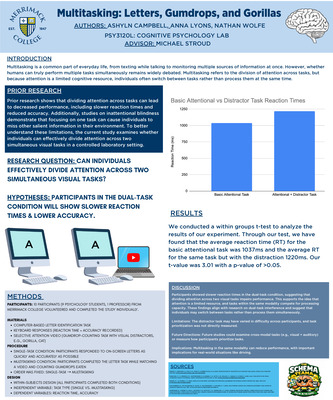
Multitasking: Letters, Gumdrops, and Gorillas
Ashlyn Campbell, Anna Lyons, and Nathan Wolfe
We explored the research question "can we effectively divide our attention across two tasks?". We designed a laboratory experiment, designing an attentional task for participants to complete, and then designing a separate attentional task (a distractor task) that they will then complete at the same time as the first attentional task. Collecting and analyzing the data gives us insight into multitasking and if we can effectively do it, or if adding the distractor task is detrimental to attention.
-

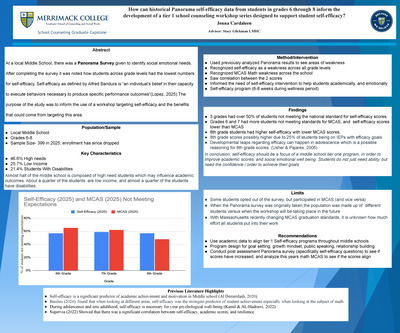
How can historical Panorama self-efficacy data from students in grades 6 through 8 inform the development of a tier 1 school counseling workshop series designed to support student self-efficacy?
Jenna Cardaleen
Student self-efficacy plays a crucial role in middle schoolers motivation, and school success. The aim of this study was to explore how historical Panorama self-efficacy survey scores from the end of the 2025 school year can inform the development of a school counseling workshop series designed to strengthen self-efficacy across grades 6-8. Using a data informed approach, student scores from MCAS were looked at to see if they aligned with the low self-efficacy scores on the survey. The study demonstrates how counselors in a school can use Tier 1 interventions to inform development of a workshop to target all students in the school. The goal of the interventions is to improve student self-efficacy scores while increasing student academic scores in the middle school.
-
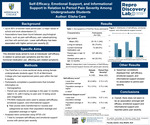
Self-Efficacy, Emotional Support, and Informational Support In Relation to Period Pain Severity Among Undergraduate Students
Elisha Care
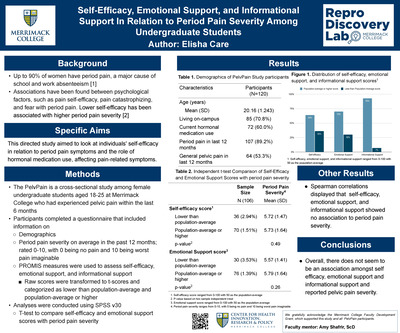
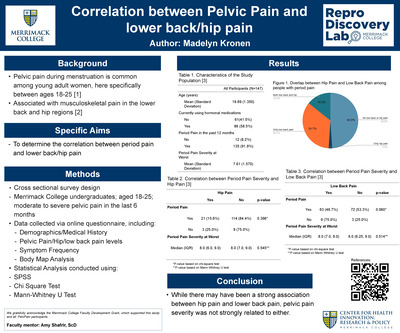
Associations have been found between psychological factors, such as pain self-efficacy, pain catastrophizing, and fear, which can display negative effects on individuals' pain experience and poor treatment outcomes. Ineffective personal control has been associated with higher menstrual pain levels. It has been reported that between 56.4% - 90% of women have period pain, which is the main cause of their absenteeism from school and work. This directed study aimed to look at individuals' self-efficacy regarding their period pain management. The PelvPain study is a cross-sectional study among undergraduate students at Merrimack College. We included female undergraduate students aged 18 to 25 who experienced moderate to severe pelvic pain within the last six months. Participants were recruited through the SONA research platform and via flyers throughout campus. Analyses were conducted utilizing SPSS v30, with questions focusing on demographics, period pain severity, self–efficacy, and emotional and informational support systems. Spearman correlation was used to assess the associations between self-efficacy, emotional support, and informational support with period pain severity.
Additionally, two categories were created for the scores for self-efficacy, emotional support, and information support. T-tests were used to compare the severity of period pain between these two categories. Results from the Spearman correlations showed no significant association between self-efficacy, emotional support, and informational support with reported pelvic pain. Results for the t-tests were similar, showing no significant association between self-efficacy, emotional support, and informational support with period pain. Overall, no associations were found between self-efficacy, emotional support, and informational support with reported period pain severity.
-

One Brain, Too Many Tasks
Kate Carreau, Ava Cognata, and Deborah Ndayisaba
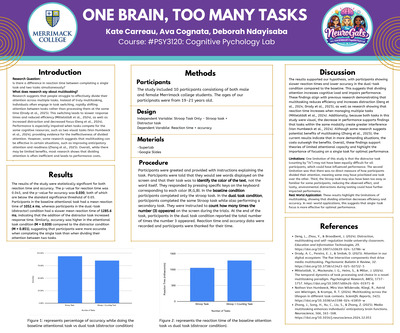
We will be doing a Stroop task ( Identifying the color of text while the word itself spells a different color). We will then have the participants do the same thing but a distractor (3) will appear randomly and they will have to count how many times the number (3) appeared at the end.
-
Katie Brown Educational Program Research Study
Maddison Chippendale, Jenna Cook, Hashi Keegan, and Alyah Morales
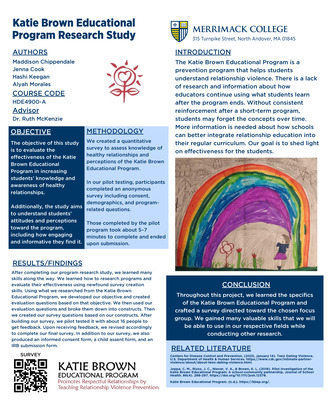
This study examines the effectiveness of the Katie Brown Educational Program (KBEP) in improving students’ understanding of healthy and unhealthy relationships, consent, and communication. Participation is voluntary and involves completing a one-time survey that takes approximately 5–7 minutes. The survey assesses students’ knowledge and awareness of key relationship concepts, as well as their feedback on the program. In addition, the study evaluates whether KBEP is meaningfully integrated into the school curriculum and whether students perceive the program as inclusive and representative of diverse identities. The findings from this research aim to inform program improvements, enhance student engagement, and support more inclusive and effective relationship education.
-

Nutrition Tracker: Mobile Meal Logging App
Kaden Ciesielski
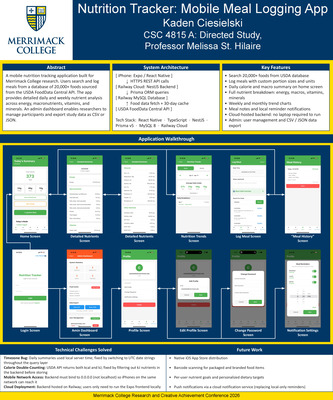
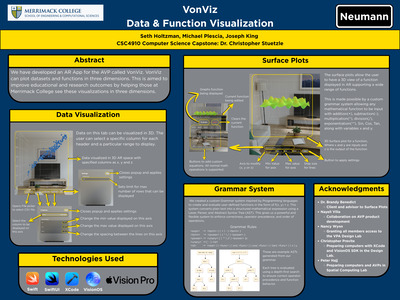
A nutrition-tracking mobile application that integrates electronic diary input with automated nutrient analysis. The software will allow users to log meals, including both content and timing, and will interface with the USDA FoodData Central or similar database to retrieve detailed macro- and micronutrient information for each entry.
-

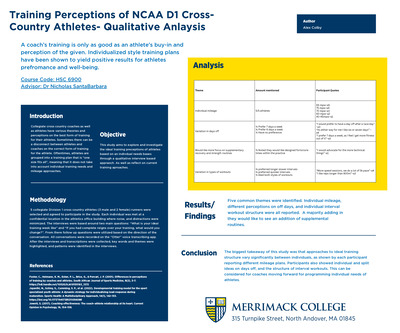
Training Perceptions of NCAA D1 Cross-Country Athletes: Qualitative Analysis
Alex Colby
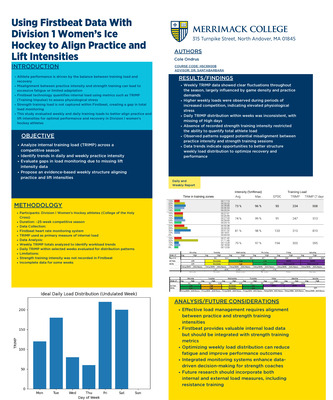
Athletes' individualized views on training and the ideal training methods for themselves can vary. This report takes 5 NCAA D1 Cross Country athletes and interviews them to observe common trends and individual athlete perspectives in their own ideal training, and how it may differ from what they have done previously with coaches. Ideally, serving as a liaison and guide for coaches in the future when considering athlete-centered training plan design and coaching.
-
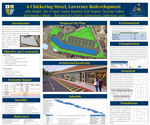
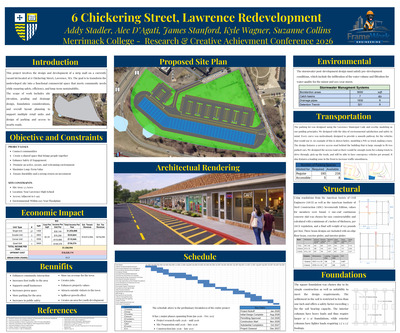
6 Chickering Street, Lawrence Redevelopment
Suzanne Collins, Alec Dagati, Addyson Stadler, James Standford, and Kyle Wagner
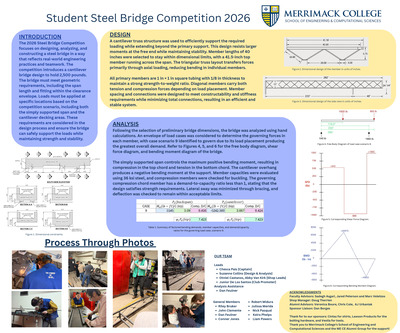
Students are tasked with developing a well coordinated engineering design for the redevelopment of 6 Chickering Street in Lawrence, Massachusetts. The project starts with creating three different design options, which are then evaluated based on their advantages and disadvantages to determine the best option for this site. This project incorporates the five major engineering disciplines to work with existing site conditions and propose a practical and sustainable design. The work is documented into a professional report to be presented to the City of Lawrence, reflecting how engineers present and communicate designs in real-world projects.
Each discipline contributes calculations and analyses to support design decisions and ensure compliance with required codes, standards and regulations. Geotechnical reports are used to evaluate subsurface conditions that influence foundation design and site stability. Environmental assessment focuses on stormwater management, groundwater recharge, and regulatory compliance to minimize environmental impacts. Civil and structural design address the site layout, parking, and infrastructure design to ensure functionality and long-term performance.
This project also includes cost estimates for materials, construction, permitting, and environmental requirements, providing insight for feasibility and budgeting. In addition, a construction schedule is developed to outline the sequence and timing of project phases, improving coordination and efficiency. Overall, this project simulates real-world engineering practices by integrating multiple disciplines into one complete design. By comparing multiple design options, the project shows how engineering decisions are influenced by both technical requirements and economic considerations. It shows the importance of technical accuracy, sustainability, cost effectiveness, and teamwork. This experience helps students to have a better understanding of how different engineering fields work together through the design process.
Printing is not supported at the primary Gallery Thumbnail page. Please first navigate to a specific Image before printing.