

Files
Download Full Text (2.1 MB)
Description
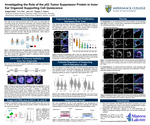
Hair cells are the mechanosensory cells of the inner ear responsible for converting sound and movement information into electrical signals that can be interpreted by the brain. In non-mammalian species like birds and reptiles, hair cells that are damaged and lost can be regenerated by the proliferation and transdifferentiation of underlying supporting cells. However, in mammals, supporting cells are quiescent and have a limited ability to regenerate lost hair cells through proliferation, which leads to permanent hearing and balance deficits. Our lab has shown that supporting cells in stem cell-derived inner ear organoids also enter quiescence after hair cell generation, mimicking the in vivo inner ear. Using single-cell RNA sequencing of inner ear organoids at multiple developmental stages, we further found that p53 signaling is active in supporting cells during this time. The p53 protein is a tumor suppressor capable of regulating cell proliferation and inducing apoptosis. During inner ear development, precise p53 activity has been shown to help control cell proliferation and maintain the formation of proper tissue morphology. We therefore hypothesize that p53 may play a role in inducing supporting cell quiescence. To further investigate this, we manipulate p53 activity in inner ear organoids using pharmacologic activators and inhibitors at different developmental stages in culture. We then assess the impact of p53 modulation on supporting cell proliferation using the marker Ki67. Understanding how p53 contributes to supporting cell quiescence may reveal strategies to stimulate hair cell regeneration in the mammalian inner ear.
Publication Date
4-30-2026
Keywords
Cell Proliferation, p53 signaling, developmental biology
Recommended Citation
Allen, Abigail, "Investigating the Role of the p53 Tumor Suppressor Protein in Inner Ear Organoid Supporting Cell Quiescence" (2026). RCAC 2026 Posters. 65.
https://scholarworks.merrimack.edu/rcac_2026_posters/65