

Files
Download Full Text (1.4 MB)
Description
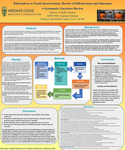
Research consistently demonstrates that incarceration has harmful consequences for youth, including negative mental health outcomes, disruption in education, and impaired social development, while also disproportionately impacting youth of color, those from low-income families, and youth with histories of trauma. Despite the substantial existing evidence on the harmful impacts of youth confinement, incarceration continues to be the primary response to youth delinquency in the United States. This systematic literature review examines community-based alternatives to youth incarceration, and synthesizes existing research on their effectiveness in addressing youth delinquency, with a focus on those which promote rehabilitation, equity, and improve overall outcomes for adolescents involved in the juvenile justice system in the United States. Drawing on research on multisystemic and family-focused therapies, restorative justice programs, and diversion initiatives, this review will examine how these interventions balance accountability with support for the youth, their families, and their communities. Lastly, it will also examine the different models of alternative interventions that are being implemented, and identify factors that can influence the successful implementation of alternative programs across diverse communities. The findings of this literature review have the potential to inform social work practice, policy, and future research in a way that prioritizes equitable and developmentally appropriate responses to youth delinquency.
Publication Date
4-30-2026
Keywords
Youth Incarceration, Community-Based Alternatives, Rehabilitation
Recommended Citation
Bello, Zuneivy Alexandra, "Alternatives to Youth Incarceration: Review of Effectiveness and Outcomes" (2026). RCAC 2026 Posters. 51.
https://scholarworks.merrimack.edu/rcac_2026_posters/51