Files
Download Full Text (640 KB)
Description
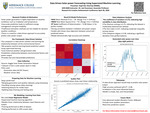
Pulse Width Modulation as an Energy-Saving Strategy for Shape Memory Alloy Based Smart Soft Composite Actuators Recent advancements in soft robotics have led to an increasing need for lightweight and energy-efficient actuators that can produce large, flexible movements. Shape Memory Alloys (SMAs), especially Nickel–Titanium (NiTi) alloys, are commonly used in smart actuation systems because they offer a high power-to-weight ratio, operate silently, and can return to their original shape when heated. When SMA wires are placed inside flexible materials like PDMS, they form Smart Soft Composite (SSC) actuators. These actuators can bend and change shape, making them useful in robotics, medical devices, and adaptable structures. Although these actuators have many benefits, they often use a lot of energy because they rely on Joule heating to function. A study by Kim et al. (2017) looked at using Pulse Width Modulation (PWM) as a better way to control these actuators to save energy without losing their performance. PWM controls the average power delivered to the actuator by changing the length of time the power is on in each signal cycle. The study tested SSC actuators made with one thick SMA wire and multiple thin bundles of SMA wires. The results showed that using PWM produced almost the same amount of force as using a traditional analog current method, but used much less energy. For SSCs with a single wire, PWM cut energy use by about 41%, and for those with multiple wires, it reduced energy by around 43%. These results show that PWM is a useful and practical way to save energy in SMA-based soft actuators. This method can greatly improve efficiency in areas like wearable robotics, mimicry systems, and low-power smart devices where small size and energy efficiency are important.
Publication Date
4-30-2026
Keywords
SMA, PWM
Recommended Citation
Sharma, Kapil Dev, "Data Driven Solar Power Forecasting Using Supervised Machine Learning" (2026). RCAC 2026 Posters. 84.
https://scholarworks.merrimack.edu/rcac_2026_posters/84