

Files
Download Full Text (1.5 MB)
Description
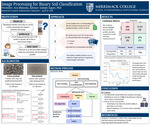
In the realm of civil engineering, it is crucial to understand soil mechanics. Soil acts as the backbone of all civil engineering, whether it comes to buildings, bridges, roadways, hydraulic systems, etc. Geotechnical engineers test soils to identify its key classification. The two main soil classifications, fine-grained and coarse-grained, have different behavior and mechanics, therefore will perform differently. For example, coarse-grained soils like gravel and sand are more suitable for building skyscrapers because they are more durable and bearing load friendly. Fine-grained soils, like clay and silts, for instance, are best for a water retention system, because they have higher permeability and retain water more efficiently. With that said, the two soil types behave differently and are driving factors when thinking about what soil is most compatible with the infrastructure type. Soil classification can become very costly and put a damper on time. However, image processing can become a great method for preliminary classification. This image processing model can help to identify soil into the two binary classification: coarse-grained and fine-grained soils. This method would be a good starting point to help further assess soil and determine which geotechnical practices are best to perform on an unknown soil sample.
Publication Date
4-30-2026
Keywords
Geotechnical Engineering, Image-Processing, Machine Learning
Recommended Citation
Minisolo, Ava, "Image Processing for Binary Soil Classification" (2026). RCAC 2026 Posters. 79.
https://scholarworks.merrimack.edu/rcac_2026_posters/79