

Files
Download Full Text (377 KB)
Description
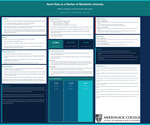
Accurate prescription of exercise intensity is essential for optimizing aerobic adaptation while minimizing the risk of overtraining. Blood lactate (BLa) testing remains the gold standard for identifying metabolic thresholds, yet its practical implementation presents significant logistical challenges in real-world training environments. Heart rate (HR) monitoring is widely used as a non-invasive alternative; however, the physiological mechanisms governing HR and BLa accumulation are distinct, arising from cardiovascular-autonomic and metabolic systems respectively. The purpose of this review was to examine the relationship between HR and BLa during exercise, assess the validity of HR as a surrogate marker of metabolic intensity, and explore alternative non-invasive measures that may more accurately reflect physiological threshold transitions. Current literature demonstrates that HR-derived estimates of the first and second lactate thresholds (LT1, LT2) are subject to significant variability across populations and fitness levels, limiting their utility for threshold-based training prescription. Detrended fluctuation analysis alpha-1 (DFA-a1), a measure of heart rate variability, has emerged as a promising non-invasive alternative, with values of approximately 0.75 and 0.5 corresponding to the first and second ventilatory thresholds respectively. However, significant limitations remain, including reduced validity under conditions of prolonged fatigue and a near-exclusive reliance on male participants in existing research. Until these gaps are addressed, DFA-a1 should be used as a complementary tool rather than a direct replacement for blood lactate testing. Future research should prioritize the inclusion of female athletes, individuals with cardiovascular conditions, and the identification of a temporal threshold beyond which DFA-a1 no longer accurately reflects metabolic intensity.
Publication Date
4-30-2026
Keywords
Blood Lactate, Heart Rate, DFA-a1
Recommended Citation
McKinney, Ryan, "Heart Rate as a Marker of Metabolic Intensity: Validity, Limitations, and Non-Invasive Alternatives" (2026). RCAC 2026 Posters. 7.
https://scholarworks.merrimack.edu/rcac_2026_posters/7