Files
Download Full Text (3.0 MB)
Description
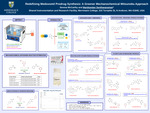
Medoxomil prodrugs are bioreversible derivatives designed to temporarily mask polar functional groups, such as carboxylic acids, to improve the physicochemical and pharmacokinetic properties of therapeutic agents. The ester-linked medoxomil promoiety enhances lipophilicity, membrane permeability, and oral bioavailability, and is rapidly cleaved in vivo via ester hydrolysis to regenerate the active drug form. This strategy has previously been employed across multiple drug classes and has led to several approved pharmaceuticals.
Esterification of the parent drug candidate with the medoxomil moiety is commonly achieved via the Mitsunobu reaction. The Mitsunobu reaction is a stereospecific transformation that converts alcohols into esters via activation with azodicarboxylates and phosphines, proceeding with inversion of stereochemistry. Its broad functional group tolerance makes it particularly well-suited for medoxomil addition; however, current protocols rely on hazardous reagents, posing sustainability challenges.
Herein, we report a modified Mitsunobu protocol employing sonication and greener solvent systems, including 2-methyl-tetrahydrofuran (2-MeTHF) and ?-valerolacetone (GVL). Using this approach, we have synthesized multiple medoxomil prodrugs from various drug candidates. Our findings demonstrate that sonication combined with greener solvents provides an efficient and practical method for medoxomil installation and is applicable to drug candidates bearing a free carboxylic acid functionality.
Publication Date
4-30-2026
Keywords
prodrugs, mitsunobu, mechanochemical
Recommended Citation
McCarthy, Serena, "Redefining Medoxomil Prodrug Synthesis: A Greener Mechanochemical Mitsunobu Approach" (2026). RCAC 2026 Posters. 64.
https://scholarworks.merrimack.edu/rcac_2026_posters/64