

Files
Download Full Text (501 KB)
Description
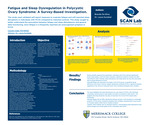
Polycystic Ovary Syndrome (PCOS) is the most common metabolic disorder affecting women of reproductive age. A recent meta-analysis estimated a global prevalence of approximately 9.2%, with prevalence rising to 11.5% when using the Rotterdam criteria (Salari et al., 2024) The Rotterdam criteria requires the presence of at least two of the following: irregular ovulation, hyperandrogenism, or polycystic ovaries visible via ultrasound (The Rotterdam ESHRE/ASRM-sponsored PCOS consensus workshop group, 2004). Although many individuals that suffer with PCOS report persistent fatigue and sleep problems, these symptoms are not currently recognized as diagnostic criteria (Teede et al., 2018). Growing evidence indicates that women with PCOS experience a higher prevalence of sleep disorders, such as obstructive sleep apnea, and reduced sleep efficiency, compared to the general population (Wang et al., 2022). Additionally, recent research suggests that altered melatonin production may contribute to fatigue and circadian rhythm disruption in this population (Evans et al., 2023). The present study aims to investigate whether people with PCOS experience increased fatigue and whether this fatigue is associated with self-reported sleep disturbances.
Publication Date
4-30-2026
Keywords
PCOS, Sleep, Fatigue
Recommended Citation
da Silva, Brenda, "Fatigue and Sleep Dysregulation in Polycystic Ovary Syndrome: A Survey-Based Investigation" (2026). RCAC 2026 Posters. 62.
https://scholarworks.merrimack.edu/rcac_2026_posters/62