

Files
Download Full Text (1.9 MB)
Description
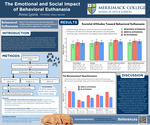
Behavioral euthanasia, defined as the euthanasia of otherwise physically healthy companion animals due to severe behavioral concerns, represents a complex and often stigmatized form of pet loss. While research has explored companion animal bereavement more broadly, limited empirical work has directly compared the emotional and social experiences of individuals who pursue behavioral euthanasia with those who euthanize for non-behavioral reasons, such as medical conditions. The present mixed-methods study examined societal attitudes toward behavioral euthanasia and associated psychosocial outcomes across three groups: individuals who euthanized a dog for behavioral reasons, those who euthanized for non-behavioral or medical reasons, and those with no euthanasia experience. A total of 459 participants completed the survey; 378 met eligibility criteria and were included in analyses. All participants completed a societal attitudes measure assessing perceptions of public judgment, social support, and media and public representation of behavioral euthanasia. Participants in both euthanasia groups additionally completed a pet bereavement scale assessing grief intensity, emotional distress, guilt, anger, and perceived stigma related to their loss. The findings suggest that behavioral euthanasia is not only an emotionally significant loss but also a socially stigmatized and often isolating experience shaped by caregiver burden and public misunderstanding. The results underscore the need for increased public awareness, stigma-informed grief support, and expanded veterinary psychosocial services, including veterinary social work, to better support individuals navigating behavioral euthanasia and its psychological aftermath.
Publication Date
4-30-2026
Recommended Citation
Lyons, Anna, "The Emotional and Social Impact of Behavioral Euthanasia" (2026). RCAC 2026 Posters. 58.
https://scholarworks.merrimack.edu/rcac_2026_posters/58