

Files
Download Full Text (333 KB)
Description
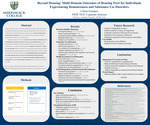
Housing and substance use often co-occur for many individuals in the homeless population. These individuals often face barriers in finding housing due to their substance use disorder (Hall et al, 2020). The Housing First model began in 1992, with the belief that housing is a human right and is an evidence-based approach that prioritizes housing for individuals, with a client-centered focus, to ensure housing stability and prevent chronic homelessness (Roebuck et al., 2024; Szeintuch, 2011).
This systematic literature reviews the effectiveness of the Housing First model for adults experiencing homelessness with substance use disorder, with attention to housing stability and substance outcomes in the United States. Thirty peer-reviewed articles were evaluated for substance use and housing stability outcomes, including those related to the Housing First approach. Themes that emerged across this literature review are: housing stability, substance use, health and system-level outcomes, and social integration and psychosocial changes. Outcomes suggest that Housing First promotes housing stability and facilitates psychosocial transformation that affects substance use patterns (Kirst et al., 2020; Tan et al., 2021; Slesnick et al., 2023).
Publication Date
4-30-2026
Keywords
Social Work, Housing First model, Substance Use
Recommended Citation
Flanders, Lillian, "Beyond Housing: Multi-Domain Outcomes of Housing First for Individuals Experiencing Homelessness and Substance Use Disorders" (2026). RCAC 2026 Posters. 46.
https://scholarworks.merrimack.edu/rcac_2026_posters/46