Files
Download Full Text (276 KB)
Description
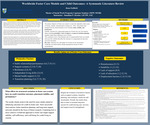
Youth aging out of the United States foster care system face disproportionately high risks of homelessness, unemployment, and mental health challenges, often due to placement instability and the absence of long-term supportive relationships. While the system prioritizes child safety and legal permanency, outcomes for adolescents remain inconsistent, highlighting the need to explore alternative models of care that emphasize stability and relational support.
This systematic literature review examines key factors associated with adolescent outcomes in foster care, including relational permanence, placement stability, community inclusion, and transition support. It also explores how these factors align with the model implemented by SOS Children’s Villages, with a specific focus on its application in Latvia. The SOS model emphasizes family-like care, consistent caregiving relationships, preservation of sibling connections, and integration into local communities, along with continued support into adulthood.
Findings across the literature suggest that youth experience more positive outcomes when they have stable placements, enduring adult relationships, continuity in education and community environments, and structured transition supports. These protective factors closely align with core elements of the SOS model. While this review does not establish causal effectiveness, it identifies conceptual similarities between evidence-based protective factors and SOS-informed practices.
The findings suggest that incorporating principles such as relational permanence, placement stability, and extended support may offer valuable direction for strengthening foster care systems in the United States and improving long-term outcomes for adolescents transitioning out of care.
Publication Date
4-30-2026
Keywords
Foster care, relational permanence, youth aging out
Recommended Citation
Gullotti, Jesse, "Worldwide Foster Care Models and Child Outcomes: A Systematic Literature Review" (2026). RCAC 2026 Posters. 45.
https://scholarworks.merrimack.edu/rcac_2026_posters/45