

Files
Download Full Text (1.9 MB)
Description
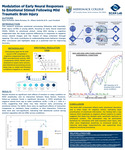
This study examines complementary aspects of ongoing research conducted by Dr. Kurdziel and Dr. Seitieck investigating emotional processing following mild traumatic brain injury (mTBI) in young adults. One line of research explores whether there are significant differences in early sensory gating (N100) and attentional control (N200) in response to negative versus neutral images in individuals following mTBI. A second line of research examines whether sleep extension, in the form of a daytime nap, improves early neural processing of negative emotional stimuli compared to a wake condition in this population.
Across both studies, participants aged 18–35 with a recent mTBI complete a cognitive reappraisal emotion regulation task while neural activity is recorded using electroencephalography (EEG). Event-related potentials (ERPs), specifically the N100 and N200 components, are used to index early sensory processing and attentional control. Participants also provide subjective ratings of emotional valence and arousal.
Together, these studies aim to better understand how emotional reactivity and regulation are affected following concussion and whether sleep may serve as a modifiable factor influencing early neural processing. It is expected that negative images will produce altered N100 and N200 responses compared to neutral images, and that sleep extension through napping will enhance neural measures of sensory gating and attentional control. Findings from this work may contribute to a more comprehensive understanding of the neural mechanisms underlying emotional processing after mTBI and inform potential strategies to support recovery.
Publication Date
4-30-2026
Keywords
Sleep, Concussion, Emotional Regulation
Recommended Citation
Kichefski, Ryan and Romano, Bella, "Modulation of Early Neural Responses to Emotional Stimuli Following Mild Traumatic Brain Injury" (2026). RCAC 2026 Posters. 110.
https://scholarworks.merrimack.edu/rcac_2026_posters/110